
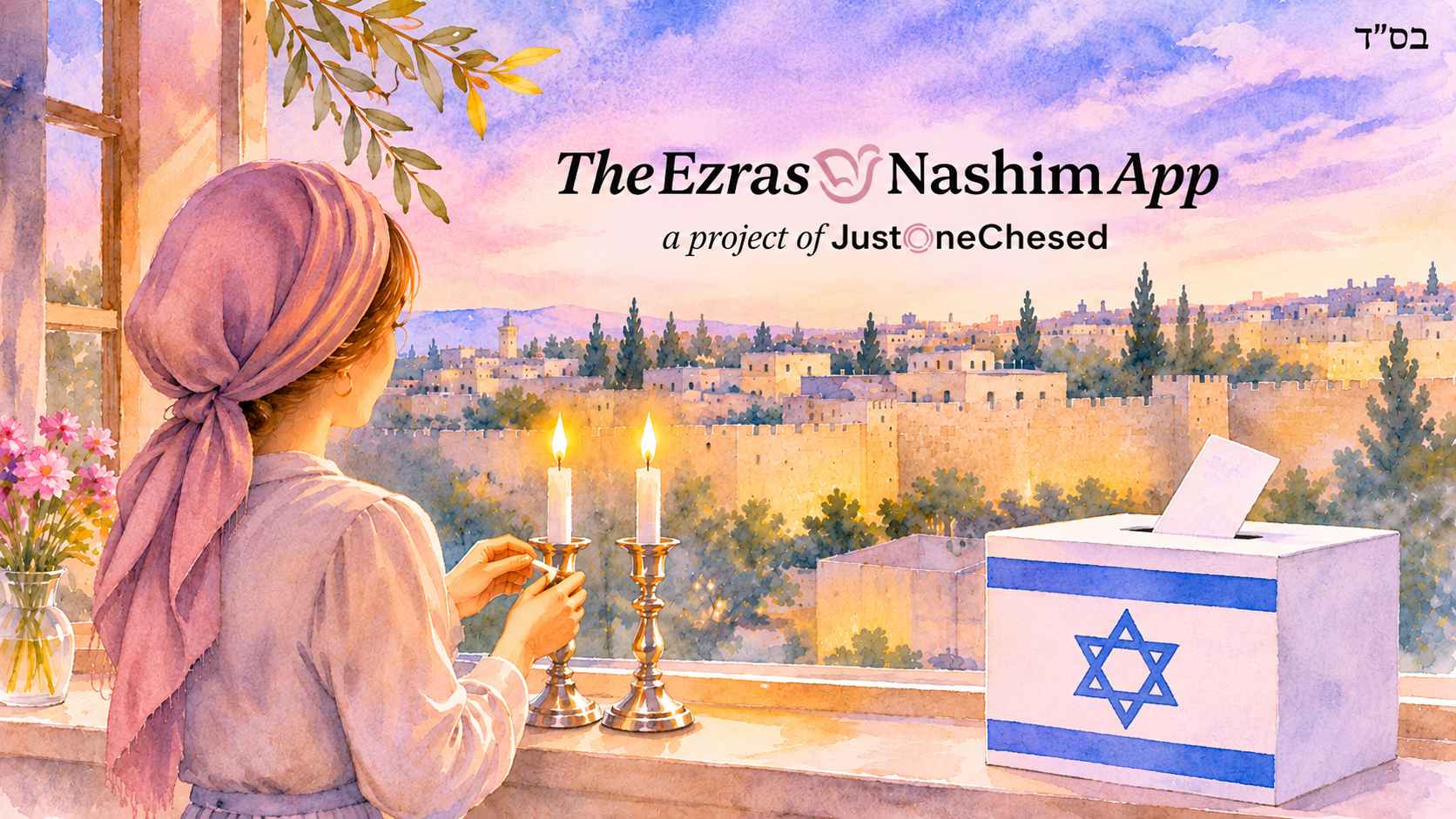
As Israel approaches election season, what can our Jewish heroines teach us about unity, disagreement, and bringing light into the world?
The days are getting shorter. Winter is approaching, and in Israel, another kind of atmosphere is taking hold.
Election season.
Opinions grow stronger. Conversations become heated. Families, friends, and neighbors can suddenly find themselves on opposite sides of a political argument.
We call them political parties. But sometimes, it feels as though we've forgotten that we are all part of one people.
How do we stay united when we disagree about the future of the country we love?
Perhaps our Jewish heroines have the answer.
Rachel Imeinu: A Mother Who Loves Every Child
In Yirmiyahu (31:14–16), Rachel Imeinu weeps for her children in exile.
Not for one tribe or one group. For her children.
Her tears remind us of something powerful:
A mother doesn't stop loving her children because they disagree.
We may have different backgrounds, beliefs, and political opinions, but we remain one family: Am Yisrael.
Miriam: Finding Light in Uncertain Times
After crossing the Yam Suf, Miriam HaNeviah led the Jewish women in song and dance (Shemos 15:20–21).
The challenges weren't over. The wilderness still lay ahead.
Yet Miriam chose to celebrate the miracles and hope that surrounded her.
We cannot control every headline or political argument, but we can choose the atmosphere we create in our homes.
Will our children hear only frustration about the Jewish people, or will they also hear about our courage, kindness, and extraordinary strength?
Esther HaMalka: Gather the Jews
When the Jewish people faced danger, Esther instructed Mordechai:
"לך כנוס את כל היהודים"
"Go, gather all the Jews." — Esther 4:16
Esther understood the power of collective responsibility.
Her message remains relevant today.
Unity doesn't mean we must all think alike. It means remembering that we belong to one another, even when we disagree.
What Does This Mean on Election Day?
We can care deeply about Israel's future, make thoughtful political decisions, and still treat those who disagree with us with dignity.
We can disagree without humiliating.
We can discuss politics without spreading negativity.
We can teach our children that strong convictions and ahavas Yisrael can exist together.
As Mishlei (3:17) teaches:
"דרכיה דרכי נעם וכל נתיבותיה שלום"
"Her ways are ways of pleasantness, and all her paths are peace."
The Light We Bring
Every Friday evening, Jewish women welcome Shabbos with candles. And as winter approaches, Chanukah reminds us that even a small flame can illuminate darkness.
When darkness increases, we don't need to add to it. We can bring light.
A kind word. A Shabbos invitation. A phone call to someone with whom we disagree. A tefilla for Am Yisrael.
Small actions that remind us we are one people.
Our Challenge This Week
Choose one act of ahavas Yisrael.
Reach out to another Jew. Do a chesed. Say a perek of Tehillim for Am Yisrael. Or simply choose kindness during a difficult conversation.
An election determines who sits in the Knesset. It does not determine who belongs to our family.
We cannot always choose the circumstances surrounding us.
But we can choose the light we bring into them.
כי נר מצוה ותורה אור
"For a mitzvah is a lamp, and Torah is light." — Mishlei 6:23