
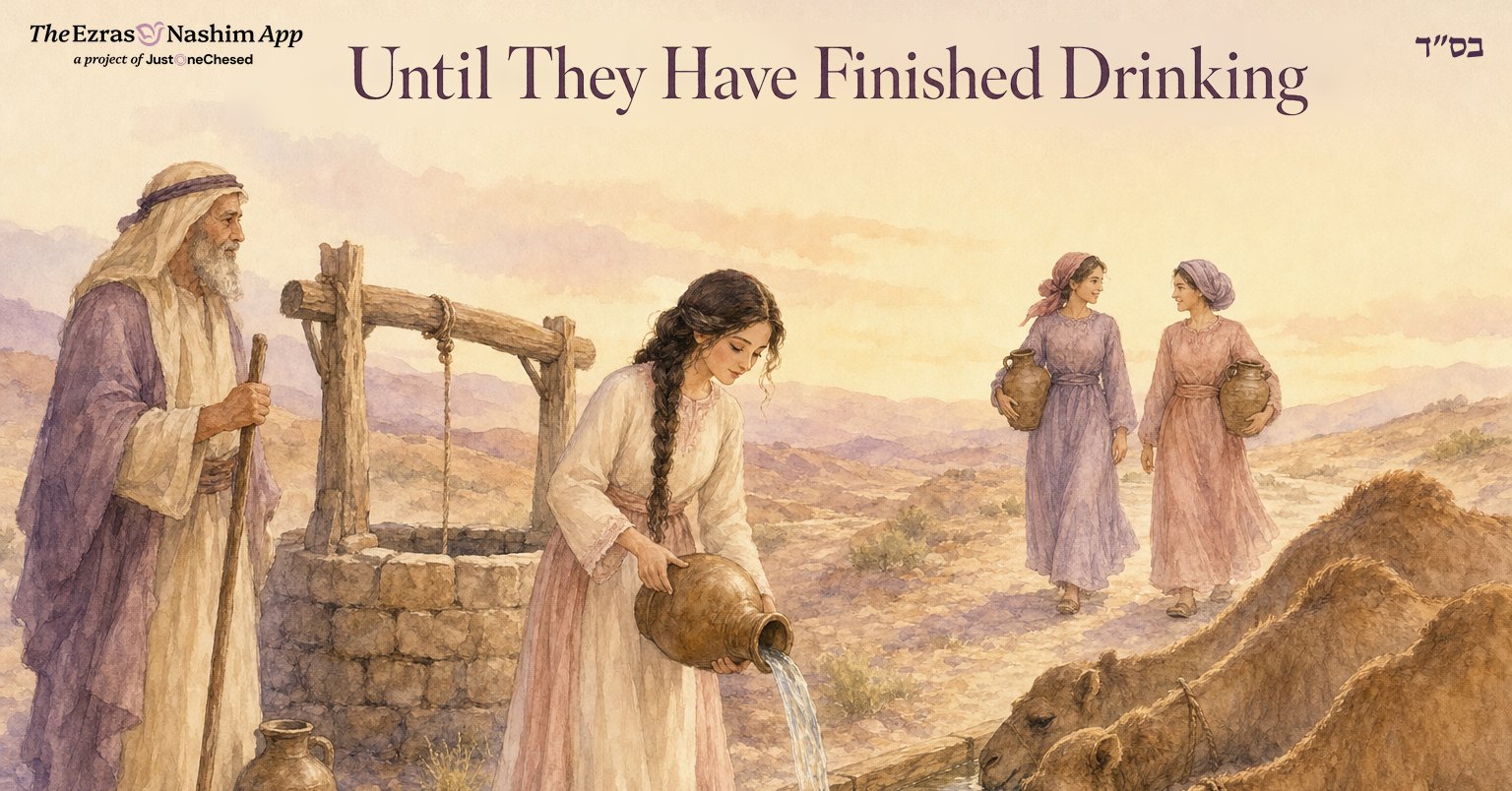
This Shabbos we read Chayei Sarah. Eliezer asked Rivka for a sip of water. What she gave him instead told him she belonged in Avraham's home.
Eliezer stands at the well outside the city of Nachor with ten of his master's camels and a mission he cannot finish alone: to find a wife for Yitzchak. Before anyone comes, he davens. Let the girl to whom I say, "Please lower your jar so I may drink," answer, "Drink, and I will water your camels too" (Bereishis 24:12-14).
A Test Built on Chesed
The sign he asks for is a sign of character. Rashi explains that such a girl is fit for Yitzchak because she does chesed, and so is worthy of entering the house of Avraham.
The Malbim reads the test closely. Asking a stranger to bring a full jar down from her shoulder is a real burden; she might well answer, "Tip it where it is and drink." A wise, good-hearted girl would think instead: if this man cannot draw water for himself, who will draw for his animals? And her compassion would reach the camels too.
"Drink, My Lord"
Eliezer runs to her and asks for "a little water." She says, "Drink, my lord," quickly lowers her jar and lets him drink. Only when he has finished does she add: "I will draw for your camels too, until they have finished drinking." She empties her jar into the trough and runs back to the well again and again, "and she drew for all his camels" (24:17-20).
The Sforno finds the lesson in the sign itself: a person who asks should ask for less than he needs, so as not to burden anyone, and a generous person gives him all he lacks, or more.
It happens once more. Eliezer asks whether her father's house has room for them "to lodge." Rashi, from the Midrash, notes that he asked for one night, while Rivka's word means many nights, and she offers straw and feed for the camels besides (24:25).
Where Helping Ends
Most requests that reach us are small: a lift, a meal, a few minutes on the phone, a name to daven for. Rivka's question was never whether to help. It was where helping ends, and her answer was "until they have finished drinking": when the need ends, not when the request does.
That is not saying yes to everything. It is listening past the words, the way Rivka understood a tired traveler with ten thirsty animals behind him, and noticing the camels behind a request.
Eliezer asked for a sip. Rivka saw the whole caravan, and that is how he knew she belonged in Avraham's home.